Meal Timing & Intermittent Fasting: Optional, Not Compulsory

Here’s something a lot of people notice once they start paying attention: when you eat can mess with your blood sugar just as much as what you eat.
Loads of people with Type 2 find the same pattern. Numbers are okay during the day, then they creep up in the evening and stay higher overnight.
Late dinners and evening snacks are usually the main culprits.
Giving your body a longer break between the last meal and the next one can help. That’s basically what intermittent fasting — or time-restricted eating — is.
Just so we’re clear — this is not a required part of the programme. It’s an optional tool.
If the idea of fasting stresses you out or feels pointless, skip this section completely. You’ll still be fine.
What’s The Evidence Say?
Studies on time-restricted eating in people with Type 2 diabetes show modest improvements in HbA1c, fasting glucose and insulin sensitivity for quite a few people.
It’s not dramatic for everyone, and a lot of the benefit probably just comes from eating less overall and cutting out late-night food.
Useful for some. Not magic.
Important Safety Stuff — Please Don’t Skip This Bit
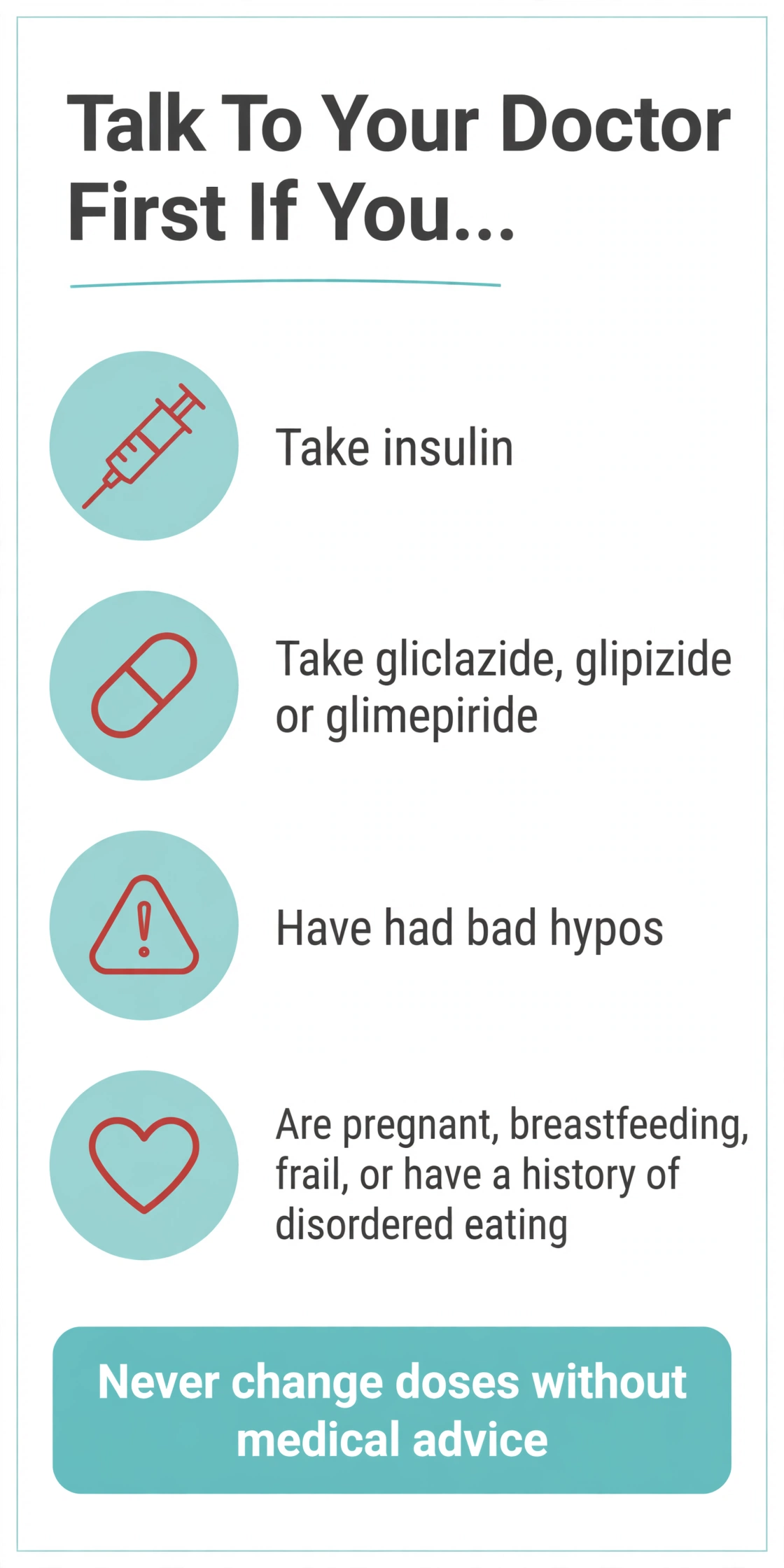
If you’re on insulin, or tablets like gliclazide, glipizide, glimepiride or similar meds that can drop your blood sugar, fasting can increase the risk of hypos. Your doses will almost definitely need changing.
Talk to your doctor or diabetes nurse before trying this. Seriously.
It’s also generally not a good idea if you’ve had bad hypos before, have a history of disordered eating, or if you’re pregnant, breastfeeding, or quite frail.
And if you have Type 1, like Karen — please don’t try fasting without talking to your diabetes team first. Our insulin needs are different, and fasting without a plan can be dangerous.
An Easy Way To Try It
If your doctor says it’s okay to experiment, you don’t need to go hardcore.
A simple starting point that works for a lot of people:
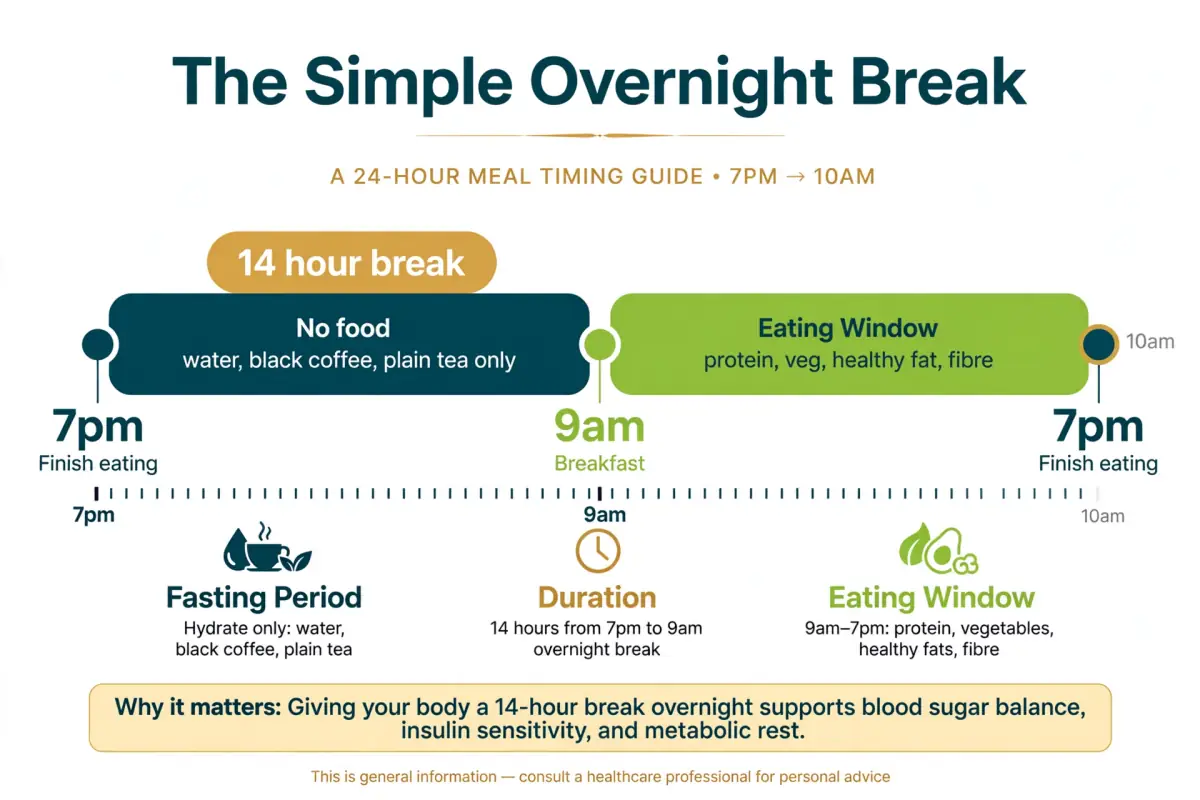
Finish eating by 7 or 8 in the evening
Don’t eat again until 9 or 10 the next morning
That gives most people a 13–15 hour overnight break without feeling like they’re properly fasting. Much more doable than the extreme versions you see online.
If that feels okay after a couple of weeks, you can always tighten it a bit. There’s no prize for the longest fast.
What You Eat Still Counts
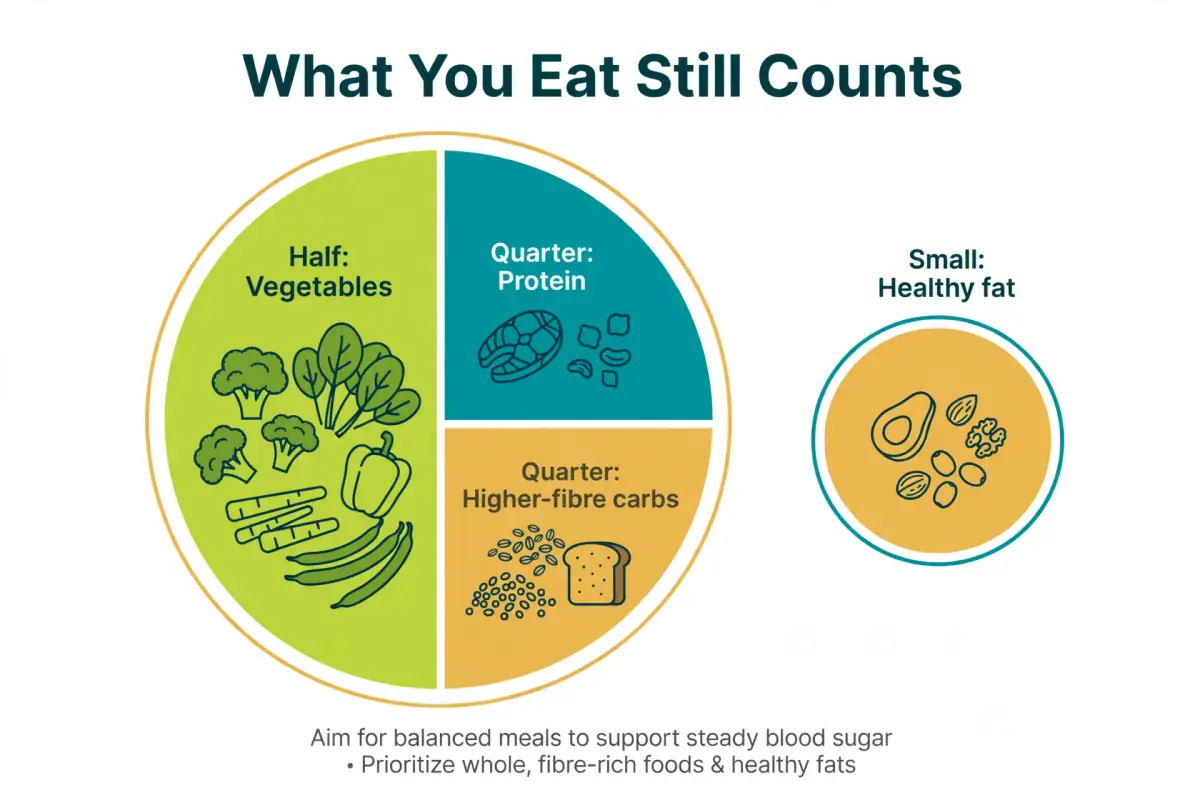
The eating window isn’t a free-for-all.
Stick to the same basics: good protein, plenty of vegetables, some healthy fat, and higher-fibre carbs when you have them. The goal is still steady blood sugar, not restriction followed by overeating.
Water, black coffee and plain tea are fine while you’re not eating.
How Do You Know If It’s Working?
Try it for two or three weeks and notice:
Your morning numbers
Your energy
Whether you’re getting hypos
How hungry or moody you feel
Whether it actually fits your life
If it helps and feels sustainable, keep it. If it makes you feel rubbish or obsessed with food, drop it. There are plenty of other things that work.
Bottom Line
Some people feel better with a consistent eating window. Others do better with regular meals and no big gaps. Both can work.
You’re not trying to follow the strictest rules. You’re just looking for what helps you feel more in control — safely, and in a way you can actually stick with.
Most of all, be kind to yourselves. 💙
This is Karen’s personal experience and general information, not medical advice. If you take insulin or glucose-lowering medication, talk to your doctor or diabetes team before changing when or how much you eat. Don’t change your doses without medical advice.
This is Karen's personal experience, not medical advice. Everyone's diabetes is different, so please talk to your diabetes team before changing your insulin, medication or diet.